
How to Ensure Your Babysitter Meets Your Family's Needs in Fulham
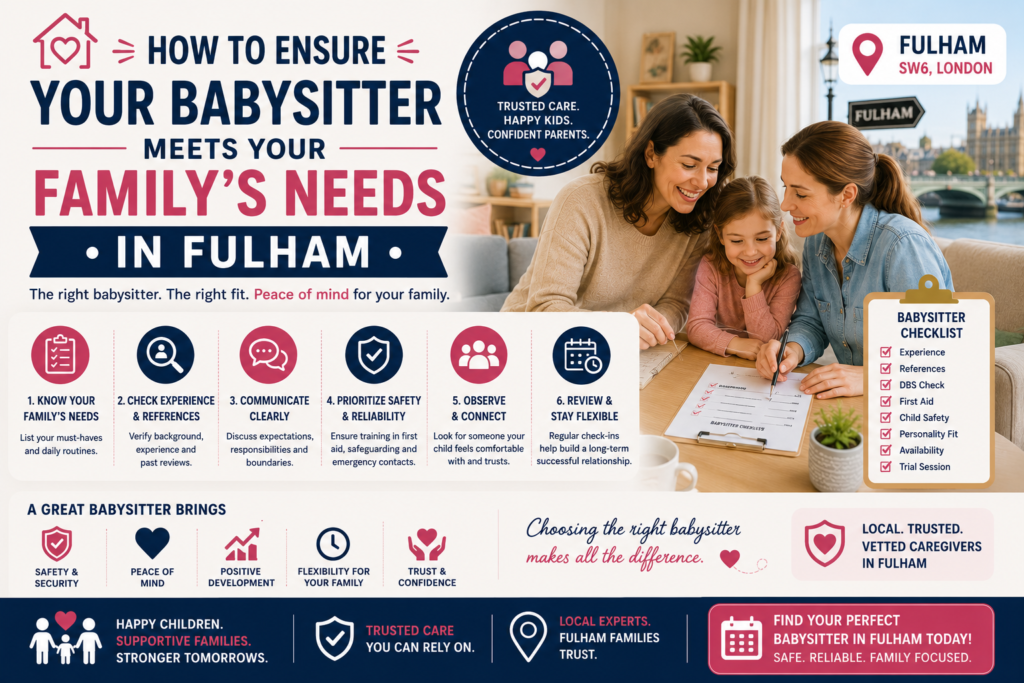
Finding dependable childcare ensure your babysitter support is one of the most important decisions parents make. Whether you require occasional evening supervision, after-school assistance, weekend help, or emergency childcare, selecting the right caregiver directly impacts your child’s safety, wellbeing, and happiness.
For families researching how to ensure your babysitter meets your family’s needs in Fulham, availability and affordability are only part of the decision-making process. A babysitter often becomes a trusted presence in your child’s life, helping maintain routines, encouraging positive development, and providing emotional reassurance when parents are away.
Across Fulham, parents can choose from a variety of childcare options. However, a caregiver who works well for one household may not necessarily be the ideal fit for another. Every family has unique expectations, parenting approaches, schedules, and childcare requirements. Therefore, finding a babysitter whose skills and personality align with your family’s needs is essential.
Throughout this guide, you’ll discover practical strategies for evaluating babysitters, checking qualifications, conducting effective interviews, assessing compatibility with your children, and creating clear expectations. By following these recommendations, parents can confidently choose a babysitter who provides safe, reliable, and nurturing childcare.
Table of Contents
What Does It Mean for a Babysitter to Meet Your Family’s Needs?
A babysitter meets your family’s needs when they have the appropriate childcare experience, safety knowledge, communication skills, and personal qualities required to support your child’s wellbeing while fitting seamlessly into your household routine and parenting style.
No two families are exactly alike. While some parents need support with newborn care, others may be looking for help with school runs, homework supervision, evening childcare, or emergency babysitting. In many cases, families may also require specialised support for children with additional needs.
Rather than focusing solely on experience, parents should consider whether a babysitter can adapt to their family’s lifestyle, values, and daily routines. The ideal caregiver provides both practical support and a safe, nurturing environment where children feel comfortable and secure.
Why Choosing the Right Babysitter Matters
Quality childcare extends well beyond basic supervision. Children benefit significantly from spending time with a caregiver who understands their emotional, social, and developmental needs.
Beyond keeping children safe, a skilled babysitter can encourage learning through play, support healthy routines, and provide a reassuring presence when parents are away. Over time, this consistency helps children feel secure and confident.
Parents also gain important benefits. Peace of mind becomes easier to achieve when you know your child is being cared for by someone trustworthy and capable. As a result, work commitments, social engagements, and family responsibilities become far less stressful to manage.
By contrast, an unsuitable childcare arrangement can create unnecessary challenges. Communication issues, inconsistent routines, and safety concerns may negatively affect both children and parents. For this reason, investing time in the selection process is always worthwhile.
Understanding Your Family’s Childcare Requirements
Every family has different childcare expectations. Before beginning your search, it helps to identify exactly what support you require.
Start by considering your child’s age, daily routine, personality, and individual needs. Some families require occasional evening childcare, while others need regular after-school assistance or emergency support.
In addition, think about the practical responsibilities you expect a babysitter to handle. These may include preparing meals, helping with homework, organising activities, or managing bedtime routines.
Childcare Planning Checklist
| Requirement | Priority Level |
|---|---|
| Child’s age and development stage | High |
| Number of children requiring care | High |
| Regular childcare schedule | High |
| Emergency childcare availability | Medium |
| Homework supervision | Medium |
| Meal preparation assistance | Medium |
| Special needs support | High |
| School pick-up or transportation | Medium |
| Overnight childcare | Low to Medium |
Important Questions to Consider
-
- How frequently will childcare be required?
-
- Which days and hours need coverage?
-
- Are there any allergies or medical concerns?
-
- Does your child have special educational or developmental needs?
-
- Would you like the babysitter to organise educational activities?
Having clear answers to these questions will help narrow your search and improve the likelihood of finding the right match.
Essential Qualities to Look for in a Babysitter
Reliability and Dependability
Trust forms the foundation of any successful childcare arrangement. Without reliability, even an experienced babysitter may struggle to meet a family’s expectations.
Evidence of dependability often includes positive references, punctuality, professional communication, and a consistent work history. Equally important is a willingness to honour commitments and communicate proactively when circumstances change.
Relevant Childcare Experience
Different stages of childhood require different approaches. Caring for an infant involves very different responsibilities compared with supervising a school-aged child.
Previous experience can provide valuable insight into a babysitter’s ability to handle age-specific challenges. When interviewing candidates, ask them to share examples of situations they have managed successfully.
First Aid and Safety Knowledge
Successful childcare depends heavily on clear communication. Parents need updates, children need guidance, and unexpected situations require quick responses.
The best babysitters communicate openly, listen carefully, and keep parents informed about important developments. As a result, trust develops naturally over time.
Strong Communication Skills
Effective communication creates trust between parents and caregivers. Regular updates, honest conversations, and clear reporting of concerns help maintain a positive childcare relationship.
Excellent babysitters typically:
-
- Follow instructions carefully
-
- Share important updates promptly
-
- Discuss concerns professionally
-
- Maintain open communication with parents
Positive Personality and Compatibility
Qualifications are important, but personality often determines whether a babysitter becomes a long-term fit.
Children tend to respond positively to caregivers who are patient, calm, encouraging, and approachable. Likewise, parents often appreciate babysitters who show initiative while respecting household rules and routines.
Questions to Ask Before Hiring a Babysitter
Conducting a thorough interview is essential.
Experience Questions
-
- How long have you worked with children?
-
- What age groups have you cared for?
-
- Can you describe a challenging childcare situation?
Safety Questions
-
- Do you have first aid training?
-
- What would you do in an emergency?
-
- How would you handle a medical concern?
Childcare Philosophy Questions
-
- How do you manage behaviour issues?
-
- What activities do you enjoy doing with children?
-
- How do you encourage learning and development?
Practical Questions
-
- Are you available during required hours?
-
- Can you assist with homework?
-
- Are you comfortable preparing meals?
Verifying Qualifications and References
Never skip background checks.
Verification Checklist
References
Contact previous families and ask:
-
- Was the babysitter dependable?
-
- How did the children respond?
-
- Were there any concerns?
Certifications
Verify:
-
- First aid certificates
-
- Childcare qualifications
-
- Training courses
Background Screening
Professional agencies typically provide:
-
- Identity verification
-
- Criminal record checks
-
- Reference validation
These checks add an extra layer of trust and security.
Assessing Compatibility with Your Children
Even the most qualified candidate may not be the right match for your family. Compatibility plays a major role in creating a positive childcare experience.
Before making a final decision, arrange a trial session where your child can interact with the babysitter in a familiar environment. During this time, observe how naturally conversations flow and whether your child appears comfortable.
Pay close attention to body language, engagement levels, and communication style. A strong connection is often visible through relaxed interaction, enthusiasm, and mutual respect.
While qualifications can be verified on paper, genuine compatibility can only be assessed through direct interaction.
Creating Clear Expectations and Boundaries
Setting expectations prevents misunderstandings.
Discuss Responsibilities
Create a written agreement covering:
| Topic | Details |
|---|---|
| Working hours | Schedule |
| Duties | Childcare tasks |
| Meals | Preparation requirements |
| Screen time | Family rules |
| Bedtime routines | Expectations |
| Emergency contacts | Important information |
Establish Household Rules
Examples include:
-
- Homework routines
-
- Screen usage
-
- Outdoor play rules
-
- Bedtime schedules
-
- Dietary restrictions
Consistency helps children feel secure.
Safety Considerations for Families in Fulham
Child safety should never be assumed.
Emergency Information
Provide:
-
- Emergency contacts
-
- GP information
-
- Allergy details
-
- Medication instructions
Home Security
Explain:
-
- Alarm systems
-
- Door locks
-
- Visitor policies
-
- Emergency exits
Activity Safety
Review:
-
- Playground guidelines
-
- Outdoor supervision
-
- Travel safety
-
- Online safety rules
Building a Long-Term Relationship with Your Babysitter
Strong childcare relationships benefit everyone.
Ways to Build Trust
Communicate Regularly
Discuss:
-
- Child progress
-
- Behaviour updates
-
- Schedule changes
Show Appreciation
Simple gestures matter:
-
- Positive feedback
-
- Thank-you messages
-
- Fair compensation
Encourage Feedback
Babysitters often notice important behavioural patterns and developmental milestones.
Listening to their observations strengthens the partnership.
Common Mistakes Parents Should Avoid
Hiring Based Solely on Cost
The cheapest option is not always the safest or most qualified.
Skipping Reference Checks
References provide valuable insight into reliability and professionalism.
Ignoring Child Compatibility
Qualifications matter, but personality fit matters too.
Failing to Communicate Expectations
Misunderstandings often arise when expectations are unclear.
Not Conducting a Trial Session
Trial sessions help confirm suitability before making a long-term commitment.
Comparison Table
Independent Babysitter vs Professional Babysitting Agency
| Factor | Independent Babysitter | Agency Babysitter |
|---|---|---|
| Background Checks | Varies | Usually Included |
| Reference Verification | Parent Responsibility | Agency Managed |
| Replacement Care | Limited | Often Available |
| Screening Process | Minimal | Extensive |
| Reliability | Varies | Typically Higher |
| Support Services | Limited | Ongoing Support |
How Do You Ensure a Babysitter Meets Your Family’s Needs in Fulham?
To ensure a babysitter meets your family’s needs in Fulham:
-
- Define your childcare requirements.
-
- Verify qualifications and references.
-
- Conduct thorough interviews.
-
- Assess compatibility with your children.
-
- Check safety training and first aid certification.
-
- Arrange a trial session.
-
- Establish clear expectations and routines.
-
- Maintain open communication.
Following these steps helps parents choose a trustworthy and reliable caregiver.
People Also Ask
How do I know if a babysitter is trustworthy?
Check references, verify qualifications, review childcare experience, conduct interviews, and arrange a supervised trial session.
What qualifications should a babysitter have?
Ideally, a babysitter should have childcare experience, first aid certification, CPR training, strong communication skills, and excellent references.
How much experience should a babysitter have?
Experience requirements depend on your child’s age and needs. Families with infants often prefer caregivers with several years of childcare experience.
Should I use a babysitting agency in Fulham?
Professional agencies can provide additional reassurance through background checks, reference verification, and replacement services.
How can I help my child adjust to a new babysitter?
Arrange introductory meetings, maintain familiar routines, and allow gradual interaction before leaving children alone with the babysitter.
FAQs
1. What is the most important factor when hiring a babysitter in Fulham?
Safety is usually the most important factor. Parents should verify references, conduct interviews, confirm qualifications, and ensure the babysitter understands emergency procedures before hiring.
2. Should babysitters have first aid certification?
Yes. First aid and CPR certification demonstrate that a babysitter is prepared to respond appropriately during emergencies involving children.
3. How can I check a babysitter’s references?
Contact previous employers directly and ask specific questions about reliability, punctuality, communication, and childcare abilities.
4. How many babysitters should I interview?
Interviewing at least three candidates allows parents to compare qualifications, personalities, and childcare approaches before making a decision.
5. Is a trial session necessary?
A trial session is highly recommended because it allows parents to observe interactions and assess compatibility with children.
6. What should I include in babysitter instructions?
Include emergency contacts, allergies, medication details, routines, household rules, meal instructions, and bedtime schedules.
7. Can a babysitter help with homework?
Many experienced babysitters can assist with homework, reading, educational activities, and school projects.
8. How often should I review childcare arrangements?
Regular reviews every few months help ensure the babysitter continues to meet your family’s evolving needs.
9. What are common red flags when hiring a babysitter?
Red flags include poor communication, lack of references, inconsistent availability, unwillingness to answer questions, and negative reviews.
10. How can I build trust with a new babysitter?
Open communication, clear expectations, feedback, and mutual respect help create a strong childcare partnership.
Conclusion
Choosing the right babysitter requires careful planning, thorough screening, and ongoing communication. When considering how to ensure your babysitter meets your family’s needs in Fulham, focus on qualifications, experience, safety awareness, compatibility, and trustworthiness.
By clearly identifying your childcare requirements, conducting proper interviews, verifying references, and arranging trial sessions, you can make a confident and informed decision. The right babysitter will not only keep your children safe but also contribute positively to their development, happiness, and daily routines.
Investing time in the selection process today can provide peace of mind and dependable childcare support for years to come.