
Supporting Bilingual Children at Nursery
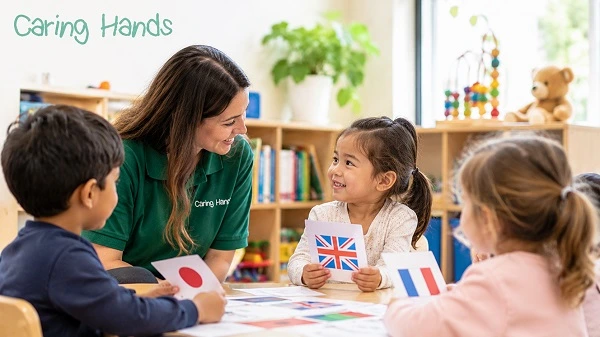
Fulham and the surrounding areas are home to families from all over the world, and many children arrive at nursery hearing two or more languages at home. Parents often ask us whether English at nursery will confuse their child, or whether they should stop using their home language. The answer to both is no. Here’s how we support bilingual children at Caring Hands, from our toddler room to our preschool in Fulham.
Is it confusing to learn two languages at once?
No. Young children are very good at learning more than one language. Some bilingual children mix words from both languages, or take a little longer to say their first words in one of them; this is a normal part of learning two systems, not a sign of a problem. Over time, most children learn to use each language with the right people.
Keep using your home language
The EYFS asks nurseries to give children opportunities to develop and use their home language in play and learning, while making sure they also reach a good standard of English before Reception. Speaking your home language at home:
- builds your child’s vocabulary and understanding, which carries over into English;
- keeps them connected to family, culture and heritage;
- lets you talk, sing and read with your child in the language you’re most expressive in.
How we support bilingual children at Caring Hands
- We learn about your languages when your child starts: which ones, who speaks them, and key words for comfort, food and the toilet.
- Key words from home. Staff learn a few words in your child’s home language, so they feel understood from day one.
- Visual support. Pictures, gestures and routines help children understand before they have the English words.
- Plenty of talk. Songs, stories and conversations throughout the day build English naturally.
- Celebrating languages. Each month we introduce a new language through songs, greetings and stories, so every child hears that many languages are part of everyday life.
- Books and festivals from different cultures, as part of our curriculum.
The “silent period”
When a child starts at nursery in a new language, it’s common for them to go quiet for a while, listening and understanding before they speak. This can last weeks or a few months. We keep talking to them, include them in everything, and don’t put them on the spot. When they’re ready, the words come.
Tips for parents
- Be consistent. Some families use “one parent, one language”; others use the home language at home and English outside. Either can work.
- Read in every language you use.
- Share songs and rhymes from your culture with your child’s key person.
- Don’t correct mixing sharply; just repeat the word back in the right language.
- Talk to us if you have any worries about your child’s speech in any language.
When to ask for advice
If your child isn’t using many words in any language by around two, or seems not to understand simple instructions in their strongest language, talk to their key person and your health visitor. The EYFS progress check at age two looks at communication and can help spot this early. The two-year check explained →
Frequently asked questions
Should I speak English at home to help my child at nursery?
Not if it isn’t your strongest language. Rich talk in your home language helps more than limited English.
Will my child be behind in English at school?
Most bilingual children catch up quickly and go on to do well. We focus on building confident English before Reception.
November 18, 2026
Written by Slavka Frain, founder and Nursery Director of Caring Hands Nursery in Fulham.

Slavka Frain
Slavka Frain is the founder and Nursery Director of Caring Hands Nursery and Kindergarten in Fulham, London, which she opened in 2011. She has more than 20 years’ experience in early years as a nursery manager, recruiter and owner, and is a mother of three. She writes practical guides for parents on choosing childcare, funding and the early years.